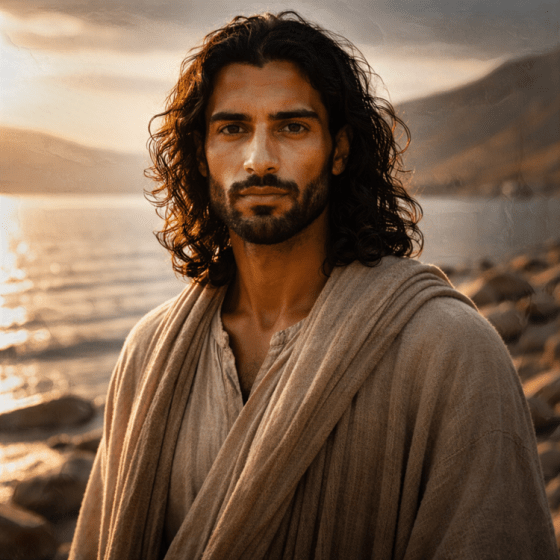
This essay reflects on the true essence of Jesus of Nazareth, emphasizing his identity as a dark-skinned Jewish teacher whose authentic teachings of love and compassion have been overshadowed by myth and institutional distortions. It advocates for reclaiming his historical context, illustrating that his message transcends religious boundaries and remains profoundly human.
Category: Soul and the Suffering World
The Living Ground
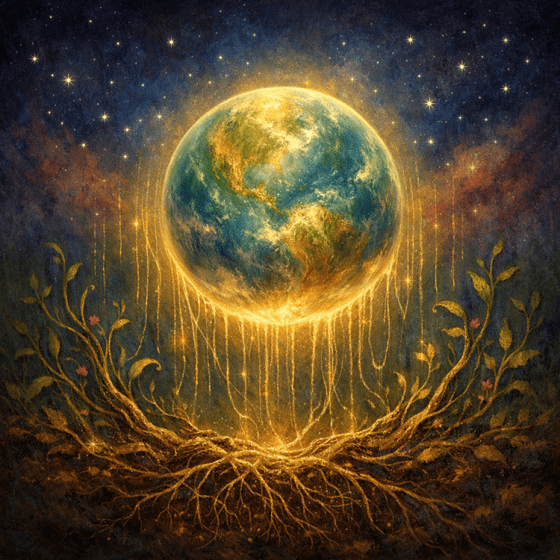
Earth, Soul, and the Sacred Duty of Caretaking There is a moment — brief, easily missed — that some people … More
The Titan Without a Temple: Brilliance, Power, and the Unlived Interior Life
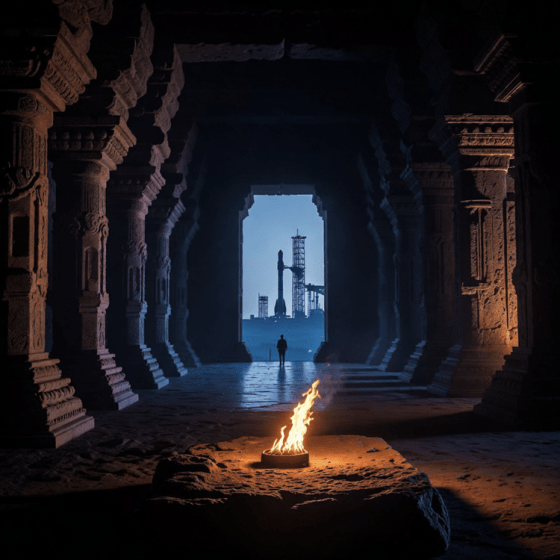
At the intersection of technological genius and spiritual immaturity, something essential about our civilization becomes visible. Elon Musk is not a villain in this telling — he is a mirror, reflecting back a world that has learned to reward the expansion of outer capability while quietly abandoning the cultivation of inner depth. Through the lenses of Jungian psychology, Vedantic wisdom, the Bhakti path of the open heart, and the cosmological framing of the Kali Yuga, this essay asks the question our age seems most reluctant to pose: what is brilliance worth, when the one who wields it has never learned to be still?
The Name of God on the Lips of Caesar
When the ego seizes the name of God, it does not feel like hubris — it feels like calling. This is Kali Yuga’s most refined inversion: the sacred language remains, the symbols proliferate, the certainty intensifies, while the interior substance — the genuine emptiness through which divine intelligence actually moves — quietly withdraws. The mystics offer the corrective not as argument but as embodied demonstration: the one through whom God truly acts is not the one who carves the commission into flesh, but the one who has become hollow enough to carry it.
The Viral Fire
Hate is not the truth of the human being. It is the report of one in pain — a nervous system that cannot rest, a psyche that has not yet been able to integrate what it has suffered, a soul that has not yet found its way to the recognition that dissolves the hostile boundary between self and other. To understand this is not to excuse what hate produces in the world. It is to see it clearly enough that the seeing itself becomes the beginning of something else.
The Age of the Falling Veil: The Kali Yuga and the Soul That Will Not Sleep
The Kali Yuga is not a metaphor. It is the cosmological address of the present moment — the fourth and darkest of the Vedic cosmic ages, in which dharma stands on a single leg, the divine presence has withdrawn behind its thickest veil, and the soul must navigate existence with three-quarters of its original light no longer ambient in the world around it. And yet the tradition’s most carefully guarded teaching is this: the Kali Yuga carries, embedded within its very darkness, a spiritual provision unavailable in any other age. Drawing on the Bhagavatam’s prophetic vision, the revolutionary Bhakti of Chaitanya, the absorbed God-consciousness of Ramakrishna, the cross-cultural witness of Hesiod, Guénon, and Jung, and the ascending arc mapped by Sri Yukteswar, this essay completes the Yuga series — not with despair, not with false comfort, but with the clear-eyed cartography the age demands.

The Age of the Dividing Veil: The Dvapara Yuga and the World at the Threshold
The Dvapara Yuga is the age of the dividing veil — the third great movement in the Vedic cosmological symphony, in which dharma stands on only two of its original legs, the Divine withdraws behind the curtain of paradox and play, and the human soul encounters for the first time the full, aching depth of sacred longing. Drawing on the Puranic vision of a world at moral twilight, the inexhaustible mystery of Krishna as the avatar perfectly calibrated to an age of complexity, the Mahabharata as the soul-map of a civilization at the knife-edge between remembering and forgetting, and the resonant echoes of Hesiod, Plotinus, Rumi, and modern consciousness research, this essay completes the trilogy of the Yugas yet to come — and in doing so, asks the question every sincere seeker must eventually face: what does it mean to love the Divine not because it is obvious, but precisely because it is not?
When the World Was Made of Light: The Satya Yuga and the Age of Primal Truth
In the Vedic vision of time, the Satya Yuga stands as the primordial Age of Truth — a cosmic era when dharma needed no defenders because it was the very substance of existence, when beings of luminous form lived in unbroken proximity to the Divine, and when the idea of seeking God would have been as strange as a wave seeking water. Drawing on the Puranas, the comparative mythologies of Hesiod and ancient Egypt, and the inner testimony of mystics like Ramakrishna and Vivekananda, this essay explores the Satya Yuga not as nostalgia but as orientation — a living cosmological memory that the soul carries forward through every age, including this one, as both its deepest wound and its most radiant promise.
The Fractured Vessel
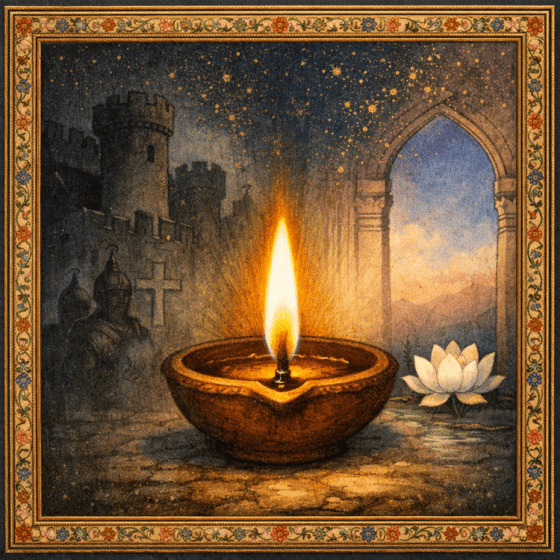
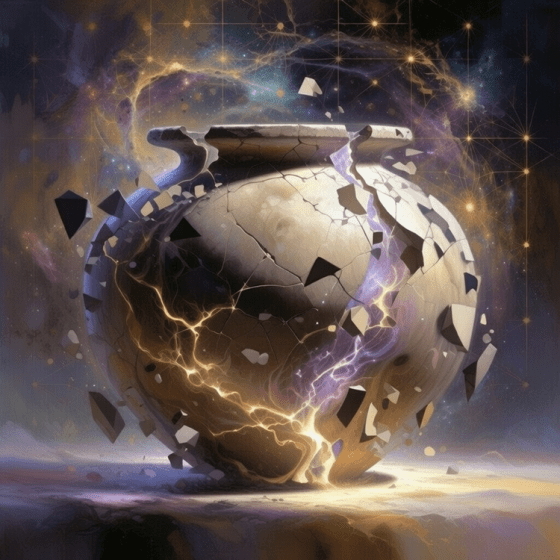
What happens when the vessel meant to carry the Divine arrives broken — neurologically compromised, morally darkened, or capable of violence that scars the world? The Fractured Vessel draws on Jungian shadow theory, Vedic cosmology, karmic wisdom, and the insights of modern neuroscience to explore why deviation and darkness exist within a creation that carries a sacred blueprint — and what the great contemplative traditions reveal about the soul’s long arc toward reconciliation. Science can repair the instrument. Evolution can refine it. But the deepest answer belongs to those who keep the inner lamp lit in a darkening age, trusting that the flame, even through the crack in the vessel, is still searching for a way to reach the world.
The Child of Darkness and the Iron Throne
The Antichrist does not announce himself — he is carried to power on the shoulders of those who call it destiny.
Where Love Seems Lost, Yet Refuses to Leave
What if the darkness we see
is not the absence of Love…
but the place where Love has become unrecognizable?
And what if the softness within you
is already part of the world changing?
A Practice for Those Who Cannot Force Calm
Where Fear Is Still Allowed was never meant to comfort. It was meant to tell the truth about what it feels … More
Where Fear Is Still Allowed
Some of us don’t suffer because we are unconscious.
We suffer because the heart has opened wider than the nervous system knows how to stabilize.
Fear doesn’t always mean retreat—it sometimes means the armor has finally come off.
When the Absence of Love Becomes a Teacher
When love is absent, attention becomes oxygen. When worth is hollow, power becomes costume. And when a society applauds the performance, it reveals its own unhealed hunger.
The Soul Is Not Always the Author of the Ending
The soul may not choose the wound, but it chooses to enter a world where wounds are possible. Meaning is not justification. Presence is the prayer.
Why Are People So Angry?
Anger is not the enemy—it’s the messenger. Beneath its heat lies grief, beneath its grief lies longing, and beneath longing, the quiet pulse of love waiting to be remembered. When we finally listen to anger, not as fury but as the heart’s last attempt to be heard, it softens into something sacred: a cry that says, I still care enough to feel.
✧ When the Soul Leaves But the Body Remains: A Dialogue Into the Hollowing of Being
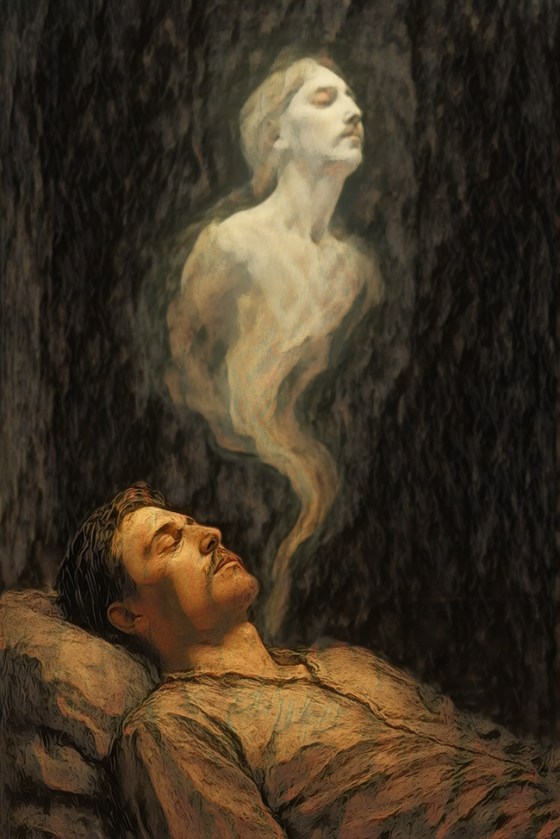
This post delves into the phenomenon of soul withdrawal, exploring its impact on individuals and history. It discusses how souls can vacate bodies due to trauma, leaving a void that may attract negative forces. However, reintegration is possible.
Thresholds of Being
The Dark Night of the Soul unfolds as a transformative journey through disintegration and rebirth, guiding individuals to shed false identities, embrace vulnerability, and reconnect with their true essence amidst life’s contradictions.
When the Temple Fell and the Soul Stood Up (pt.2)
The content explores the concept of sin as a control mechanism invented by religious institutions, emphasizing that true holiness comes from inner knowing and love, not fear or external authority.
When the Temple Fell and the Soul Stood Up (pt.1)
The text discusses the disconnection between institutionalized religion and the true teachings of Christ. It emphasizes the importance of inner spirituality over blind obedience, advocating for personal communion with the divine.
The Divine Gamble
The content explores the relationship between the soul and personality, emphasizing the soul’s choice of incarnation as a transformative journey. It reflects on the challenges of ego, violence, and spiritual growth.
The Soul of Cultism
The content explores the soul’s journey through cults, highlighting the desire for belonging and truth. It emphasizes healing through disillusionment, reclaiming personal faith, and recognizing one’s innate divinity.
The Ones Who Suffer Beautifully
The content explores the paradox of light-filled souls facing profound struggles. It emphasizes their hidden strength, ability to transform pain, and the sacred work they perform, often unnoticed by the world.
The Three Great Trials of the Human Heart
This post explores how grief, loneliness, and injustice profoundly shape personal growth. These experiences are portrayed as transformative initiations, revealing deeper truths about love, connection, and soul integrity amidst suffering.