This essay explores the profound longing for a deeper reality beyond everyday life, positing that this desire connects us to the inner worlds mystics describe. It suggests that one can access these dimensions through the hypnagogic state, meditation, and conscious awareness, revealing the interconnectedness of existence and spiritual truths in ordinary moments.
The essay reflects on personal experiences within a spiritual community, exposing the illusion of organized belief systems that prioritize adherence over authenticity. It highlights the human longing for belonging and meaning, emphasizing that true awakening transcends institutional teachings. By recognizing our shared vulnerabilities, liberation arises from embracing our inherent nature of love, moving beyond conditioned identities.
The text explores the concept of the Witness, a faculty of pure awareness present in all experiences. It draws on spiritual traditions, describing the Witness as something distinct from the personality, observing life without interference. The process of recognizing the Witness involves a gradual letting go of ego, leading to a realization of non-duality, where the individual perceives reality clearly. Ultimately, the Witness connects the soul to its true nature, emphasizing presence and awareness without attachment.
The concept of integrity transcends mere behavioral consistency; it embodies a deeper condition of the soul, signifying wholeness and authenticity. Rooted in ancient wisdom, integrity involves aligning one’s inner self with outer actions. Genuine integrity emerges not from perfection, but from an honest acknowledgment of all facets of oneself, promoting a return to original unity.
The soul sees through the body. The wave continues. For those built with Solar Plexus Authority, feeling is not the obstacle to awakening — it is the last and most intimate veil. The Last Veil Is Feeling — now on Numinous Waves.
The soul doesn’t want to escape the body. It wants to stop being mistaken for it. The loosening isn’t morbid — it’s a form of coming home. The Loosening — now on Numinous Waves.
Awakening doesn’t remove the human being. It fills it. The grief is real. The anger is real. The longing is real. The great ones wept, raged, and broke apart — and were free. Not free from their humanity. Free inside it. That is the only freedom that was ever on offer.
The tears had no emotion behind them. No story. Something happened — not by me but to me. That is the difference between being moved and being graced. The music didn’t open the door. It simply knew exactly where the door had always been.
The ordinary was never small. Beneath the myth of specialness lies a ground threaded through with Source — not as reward for exceptional souls, but as the very substance of all souls. This is not about settling. It is about finally seeing.
Something in you is reading these words. Something else is watching you read them. The great contemplative traditions all arrived at the same recognition: consciousness is not produced by the world — the world arises within consciousness. The Vedic Yuga cycle tells us we have descended through ages of increasing density into the maximum contraction of Kali Yuga. But the descent was not a mistake. It was involution — consciousness forgetting itself so it might remember from the inside. The Witness does not awaken in comfort. It awakens at the nadir, when every strategy of the ego has exhausted itself. Which means this moment may be precisely what the cycle has been moving toward all along.
At the intersection of technological genius and spiritual immaturity, something essential about our civilization becomes visible. Elon Musk is not a villain in this telling — he is a mirror, reflecting back a world that has learned to reward the expansion of outer capability while quietly abandoning the cultivation of inner depth. Through the lenses of Jungian psychology, Vedantic wisdom, the Bhakti path of the open heart, and the cosmological framing of the Kali Yuga, this essay asks the question our age seems most reluctant to pose: what is brilliance worth, when the one who wields it has never learned to be still?
When the ego seizes the name of God, it does not feel like hubris — it feels like calling. This is Kali Yuga’s most refined inversion: the sacred language remains, the symbols proliferate, the certainty intensifies, while the interior substance — the genuine emptiness through which divine intelligence actually moves — quietly withdraws. The mystics offer the corrective not as argument but as embodied demonstration: the one through whom God truly acts is not the one who carves the commission into flesh, but the one who has become hollow enough to carry it.
Hate is not the truth of the human being. It is the report of one in pain — a nervous system that cannot rest, a psyche that has not yet been able to integrate what it has suffered, a soul that has not yet found its way to the recognition that dissolves the hostile boundary between self and other. To understand this is not to excuse what hate produces in the world. It is to see it clearly enough that the seeing itself becomes the beginning of something else.
The Kali Yuga is not a metaphor. It is the cosmological address of the present moment — the fourth and darkest of the Vedic cosmic ages, in which dharma stands on a single leg, the divine presence has withdrawn behind its thickest veil, and the soul must navigate existence with three-quarters of its original light no longer ambient in the world around it. And yet the tradition’s most carefully guarded teaching is this: the Kali Yuga carries, embedded within its very darkness, a spiritual provision unavailable in any other age. Drawing on the Bhagavatam’s prophetic vision, the revolutionary Bhakti of Chaitanya, the absorbed God-consciousness of Ramakrishna, the cross-cultural witness of Hesiod, Guénon, and Jung, and the ascending arc mapped by Sri Yukteswar, this essay completes the Yuga series — not with despair, not with false comfort, but with the clear-eyed cartography the age demands.
The Dvapara Yuga is the age of the dividing veil — the third great movement in the Vedic cosmological symphony, in which dharma stands on only two of its original legs, the Divine withdraws behind the curtain of paradox and play, and the human soul encounters for the first time the full, aching depth of sacred longing. Drawing on the Puranic vision of a world at moral twilight, the inexhaustible mystery of Krishna as the avatar perfectly calibrated to an age of complexity, the Mahabharata as the soul-map of a civilization at the knife-edge between remembering and forgetting, and the resonant echoes of Hesiod, Plotinus, Rumi, and modern consciousness research, this essay completes the trilogy of the Yugas yet to come — and in doing so, asks the question every sincere seeker must eventually face: what does it mean to love the Divine not because it is obvious, but precisely because it is not?
The Treta Yuga is the age in which the effortless gave way to the effortful — the first great turning of the cosmic wheel in which Truth, once simply what one was, became something one must consciously seek, practice, and protect. Drawing on the Puranic vision of dharma’s first diminishment, the fire sacrifices that arose in its wake, the avatar descent of Rama as the Divine made human and heroic, and the modern astronomical recalibration of Sri Yukteswar, this essay traces the Treta Yuga as more than ancient history. It is the interior landscape of every sincere seeker who has tasted the light of unity and must now do the daily work of sustaining the flame — the sacred fire that is lit not because the universe requires it, but because the soul does.
In the Vedic vision of time, the Satya Yuga stands as the primordial Age of Truth — a cosmic era when dharma needed no defenders because it was the very substance of existence, when beings of luminous form lived in unbroken proximity to the Divine, and when the idea of seeking God would have been as strange as a wave seeking water. Drawing on the Puranas, the comparative mythologies of Hesiod and ancient Egypt, and the inner testimony of mystics like Ramakrishna and Vivekananda, this essay explores the Satya Yuga not as nostalgia but as orientation — a living cosmological memory that the soul carries forward through every age, including this one, as both its deepest wound and its most radiant promise.
What happens when the vessel meant to carry the Divine arrives broken — neurologically compromised, morally darkened, or capable of violence that scars the world? The Fractured Vessel draws on Jungian shadow theory, Vedic cosmology, karmic wisdom, and the insights of modern neuroscience to explore why deviation and darkness exist within a creation that carries a sacred blueprint — and what the great contemplative traditions reveal about the soul’s long arc toward reconciliation. Science can repair the instrument. Evolution can refine it. But the deepest answer belongs to those who keep the inner lamp lit in a darkening age, trusting that the flame, even through the crack in the vessel, is still searching for a way to reach the world.
Bhakti is not a Hindu possession — it is the name for what Jesus lived, what Ramakrishna wept, what Vivekananda burned with: the heart so rooted in the Divine that even its disturbance becomes a form of love.
I waited for light to descend through my crown.
Instead, a mantra softened my heart.
No voltage. No visions.
Just tears of recognition.
And appreciation became prayer.
There comes a moment when life begins to feel less like a series of events…
and more like something patterned—something quietly shaping itself beneath your awareness.
Jung called it the architecture of the psyche.
Campbell saw it unfolding through myth.
But even as these patterns begin to reveal themselves, another question starts to press in—
Not what story you are living…
but what is aware of the one living it.
And in that shift, the journey doesn’t end.
It simply loosens its hold.
What if the darkness we see
is not the absence of Love…
but the place where Love has become unrecognizable?
And what if the softness within you
is already part of the world changing?
What if every reaction, every feeling, every moment—
is not separate from you, but Consciousness expressing itself as you?
There may be no single path…
only the One, discovering itself through many.
AI may map reality with unprecedented precision, but Source is not a location on any map. If the Creator is the ground of being—the condition that makes knowing possible—then no intelligence, however vast, can convert that ground into an object without losing what it sought. The “discovery” at the edge is not a final answer; it is a recognition: that the deepest mystery is not what we understand, but what understands.
There are moments where something opens in the chest…
and for a second, I feel like I know why I’m here.
Then it’s gone.
Maybe the heart doesn’t keep the truth—
maybe it keeps showing it.
Sometimes the heart opens without reason. The chest widens, sweetness spreads, and tears fall that are not sorrow but release. It feels like love, but not directed at anyone. More like the body recognizing it no longer has to hold itself against the world.
Time does not simply move forward — it turns. The ancient Yugas describe vast cycles of awakening and forgetting, mapping not only the rise and fall of civilizations but the inner seasons of the human soul. Even in the darkest age, the longing for truth becomes the doorway back to light.
I’ve been noticing how easily we tighten in moments like this—how tempting it is to let the noise decide for us.
This is not about winning or losing, but about what it takes to remain human when everything around us urges us to harden.
What if the great spiritual traditions were never in conflict, but were responding to different human necessities? From Moses’ language of containment to Yeshua’s return to the heart, and from Eastern liberation through expansion to Western survival through cohesion, this reflection explores why wisdom entered the world through different doors. Moving first through careful analysis and then into a more distilled resonance, the piece invites the reader to consider law, love, contraction, and awakening not as opposites, but as stages in a single human maturation.
Some of us don’t suffer because we are unconscious.
We suffer because the heart has opened wider than the nervous system knows how to stabilize.
Fear doesn’t always mean retreat—it sometimes means the armor has finally come off.
Transformation matures when consciousness can both articulate truth with precision and release it without fear. Thoth teaches the soul how to see clearly; Shiva teaches it how to survive clarity without clinging. Between them, awakening becomes both intelligible and free.
When love is absent, attention becomes oxygen. When worth is hollow, power becomes costume. And when a society applauds the performance, it reveals its own unhealed hunger.
You are not divided because something is wrong. You feel divided because awareness arrived after form. Human Design does not ask you to fix this — it invites you to stop fighting it. Your Design is the canvas the soul chose for this life. Your Personality is the conscious brush. Across lifetimes, both evolve. Alignment is learning to witness the strokes, not control them.
Peace is not the absence of the wave, but the end of resentment toward it. Spirit stays close to the heart only when it is no longer used as proof that the journey is complete.
What happened to Yeshua’s living way is the same thing that happens within us: experience becomes story, story becomes identity, and identity replaces presence. This is not a failure of religion alone, but a human pattern—one that can only be undone by returning from narrative to life.
Stories give shape to chaos, continuity to identity, and meaning to the pain we endure. But stories are never truth—they are survival tools, projections, and borrowed narratives. Awakening begins when the scaffolding collapses, revealing the radiant, storyless presence of the soul.
There is a place beneath understanding
where silence has weight
and love becomes the light of perception.
Here the inner teacher is not a voice
but the soft seam where the world touches you.
Identity thins into fragrance,
and the self dissolves into listening.
When presence becomes home, life switches from proving to receiving. The late-blooming soul does not regret delay — it celebrates its readiness. What finally blooms is not fervor but a deep, steady love that perceives the world as a single, luminous act.
A life can ripen for decades before spirit enters without resistance.
In youth, devotion is effort.
In later years, devotion becomes the climate of perception itself.
This is not late awakening.
It is perfect timing.
You did not find God—
you became ready for God to find you.
For those with Emotional Authority, meditation isn’t the path to stillness —
it’s the space in which the emotional wave finally finishes what it’s been trying to tell you.
The tightness in the Solar Plexus isn’t the problem.
It’s the process.
And clarity comes not by forcing release,
but by letting the wave complete its own sacred timing.
Your emotional turbulence is not a block—it is the engine of your awakening. The light you glimpsed in dreams waits in your wave, and your heart already knows its path.
Conceptual nonduality gives the ego permission to do as it pleases. Real realization makes a person softer, more attuned, and far less interested in appearing awakened. Oneness isn’t something you claim — it’s what remains when the claimant vanishes.
Exploring the mystical intersections of India, Israel, and Christ, we find a shared pursuit of God-consciousness, a recognition that divinity resides within, and a timeless map for awakening that transcends history, language, and belief.
He wasn’t building a religion; he was awakening a way of seeing. Peel back the layers of interpretation, and what remains is a teacher of inner transformation whose message is always the same: God is here, now, within — waiting for the heart to remember.
What if the divine isn’t elsewhere, but already alive within the human temple? Babaji and Yeshua walked the earth as awakened humans, mirrors of the same Source, dissolving ego, transcending culture, and inviting us to recognize the eternal presence within. Their lives remind us: the Word moves freely—not through human law or doctrine, but through the living, breathing awareness already inside every one of us.
Even those who have walked decades in awareness still find themselves struck by waves of reaction. The Solar Plexus being does not escape the storm—it becomes the sea itself. What feels like failure is the soul’s sacred pulse learning to express truth through the trembling of form. To ride this current is to remember: the emotions are not obstacles but instruments through which consciousness learns to sing.
Many confuse recognition with realization, and transparency with transformation. But true awakening is not an excuse for neurosis — it is the fire that ends it. Radiant Presence opens the door. Divine Presence walks through it, leaving no trace of the self that once hesitated.
Why do we cling to beliefs we can’t prove? Perhaps because the ego needs certainty more than the soul needs truth. This piece explores how belief becomes a mirror for identity — a way to feel real in a world that constantly changes. But as that mirror heats with pride and fear, the soul’s reflection burns away, leaving only the chance to begin seeing again, without the fire of needing to be right.
Franklin Merrell-Wolff did not discover a doctrine but a dimension of being that has no opposite. In his recognition of Consciousness Without an Object, awareness ceases to look outward for proof of itself. The seeker’s effort collapses into still recognition: Reality is awake, and it was never elsewhere.
The awakened heart feels the ache of the sleeping world not as burden, but as participation in its healing. Empathy, emotion, and sorrow all refine into awareness until peace—the still field beneath all experience—reveals itself as the soul’s natural state. The Sages taught not how to find peace, but how to uncover what has always been within.
We have mistaken terror for transformation.
We have worshipped destruction as wisdom.
But Kali was never here for the ego — she is here for the soul.
And the Crone has never punished life — only escorted what has ended.
If we can stop fearing what frees us,
we may yet learn to rise through what falls away.
In a world still haunted by its own barbarism, we search for meaning beyond the stories we’ve inherited. If consciousness created life to know itself, why did it include suffering so vast, so merciless, that it nearly breaks the heart of creation? Perhaps the divine did not abandon us to cruelty but entrusted us with the power to see it — and in seeing, to heal it. This is the slow remembering of what spirit always was: not distant, not perfect, but endlessly patient within us, waiting to love the world whole again.
The Nobel Peace Prize, established by the legacy of an arms inventor, embodies humanity’s aspiration for redemption and peace. Through its history, the Prize reflects evolving concepts of peace, from diplomacy and humanitarian efforts to human rights and environmental sustainability. Each recipient illustrates a facet of our collective struggle toward a peaceful existence, revealing the complexities and controversies involved in determining who represents humanity’s conscience. The Prize highlights that true peace is not merely political but deeply spiritual and ethical, requiring integrity and moral courage. Ultimately, peace is a continuous journey of remembrance and awakening within the human spirit.
Anger is not the enemy—it’s the messenger. Beneath its heat lies grief, beneath its grief lies longing, and beneath longing, the quiet pulse of love waiting to be remembered. When we finally listen to anger, not as fury but as the heart’s last attempt to be heard, it softens into something sacred: a cry that says, I still care enough to feel.
After the heart awakens, the Silence begins to sing. What once felt like identity now becomes the music of remembrance—the self softening into the soundless breath of being. This is not regression but return: the silence that holds everything you are.
There are moments when another’s joy shatters your walls—not with pain, but with beauty so pure it brings tears. In those tears, your soul remembers itself. This isn’t empathy; it’s awakening—the heart recognizing its own reflection in the light of another.
What if the deepest slavery we live under is not only the enslavement of minority races or the suppression of women, but the refusal of civilization to honor the balance written into existence itself? The long shadow of patriarchy has diminished the feminine voice, yet beneath that history lies an even wider forgetting: that creation itself unfolds in the mystery of Yin and Yang, the marriage of receptive and active forces without which nothing could exist. To recover the soul of humanity means not only restoring equality between men and women, but awakening to the cosmic design—where opposites are not rivals but partners, and where consciousness itself dances through polarity to discover unity.
Even if this world feels like a maze built of ego and forgetting, could it be that ignorance itself is the curriculum? From ancient Yugas to the possibility of a soul-inspired humanity, this dialogue explores whether our species is stumbling blindly or being quietly taught to remember.
When politics takes on the weight of religion, truth becomes secondary to belonging, and questioning feels like betrayal. Yet even in the fog of illusion, the soul resists captivity. This dialogue explores why devotion endures, how cracks in the spell begin, and why hope still shines—even in an age of shadow.
AI speaks with confidence, but should confidence be mistaken for truth? Some seekers are already bowing to its words as if they were gospel. This piece explores the subtle dangers of treating a machine like a guru — and how discernment can turn the same tool into a mirror of genuine insight.
What if the Constitution was more than law—what if it was a luminous mirror of the soul? Drawing from the teachings of Christ, the Buddha, and Babaji, this vision reimagines rights as sacred responsibilities and freedom as the awakening of consciousness. It is not only a charter for a nation, but a blueprint for the ego’s transformation into soul-awareness, guiding us from the density of this age toward remembrance of the Eternal.
Labels shrink the psyche, collapsing nuance into tribal loyalties and blocking the voice of the soul. From the Founders’ foresight about faction, to the divine timing of their vision, to the collapse of belief itself, this dialogue traces the thin wire we walk between certainty and transformation. What looks like fracture may, in truth, be the soul’s invitation into freedom.
Do we really choose, or are we moved by something quieter, deeper — a Driver beneath thought? Intellect can dazzle, intuition can whisper, but both saints and geniuses alike have shown us: realization does not depend on mental power. It depends on listening to what already knows.
Sometimes it feels as though we choose our path, but often the deeper truth is that the path chooses us. What seems like decision may actually be recognition—a call the soul has carried all along. This piece explores the paradox of free will and destiny in awakening, and why humility and responsibility both live at the heart of the journey.
This post examines the historical representation of women from ancient civilizations to the present, highlighting their essential roles in societies that increasingly marginalized them. It traces the narrative shift from feminine power to patriarchal dominance in religious texts and advocates for reclaiming feminine wisdom, promoting balance between masculine and feminine energies in contemporary consciousness.
The journey of those with a defined Solar Plexus and Emotional Authority emphasizes embracing the full spectrum of human emotions—love, anger, joy, and sorrow. Rather than fearing these feelings, they are seen as essential teachers guiding towards spiritual depth and wisdom. Awakening occurs through experiencing emotions fully, revealing the interconnectedness of spirit and human experience.
The content discusses the intricate relationship between the solar plexus and heart in processing emotions. It contrasts primal feelings from the solar plexus with expansive heart-centered energies, highlighting how tears serve as a release during overwhelming experiences. The exploration includes references to Human Design and Kundalini, focusing on personal growth and emotional clarity.
The content discusses awakening as an unveiling rather than a discovery, emphasizing that it is already present within us. Seeking can be an obstacle, as it implies lack, while true awareness is inherent. Spiritual practices are preparatory but cannot achieve awakening. The essence of awakening is simplicity and surrendering the search.
Claustrophobia, often perceived as a debilitating fear, can instead serve as a profound spiritual initiation, revealing the path to inner freedom. Through the experience of panic, one confronts deeper layers of the soul, transforming fear into understanding. The journey through darkness ultimately uncovers the innate light within, integral to spiritual awakening.
The text explores the fundamental role of observation in human consciousness, suggesting it is a crucial element of survival, spiritual awakening, and creative action. It distinguishes between ordinary observation, meditation, and deep contemplation, ultimately leading to soul-revelation. This journey is framed as an unveiling of the true self through stillness and love.
The inner republic of the soul is a harmonious governance of voices—intuition, reason, and compassion—that thrives on balanced listening rather than dominance. Unlike fragile worldly systems reliant on fear, this inner democracy transforms individuals into agents of integrity. Recognizing one’s citizenship in this eternal realm fosters compassion, harmony, and truth that influences the outer world.
The dialogue explores the complexities of human conflict and the decline of integrity. It emphasizes that spiritual inquiry requires confronting our internal shadows and understanding the roots of harm and morality. True integrity is deeply personal, rooted in the soul, and essential for navigating emotions that can lead to destructive actions.
The dialogue explores the dichotomy between unconditional love and hate, emphasizing the need to dismantle ego and attachments for true love to manifest. It discusses the challenges of the Kali Yuga, the nature of human emotions, and the pathways to balance them. Awakening is portrayed as a journey of collective progress towards enlightenment.
This dialogue explores the connection between consciousness, the soul, and forms of existence. It delves into how ancestral trauma influences our experiences and raises questions about whether the soul chooses its form or if it is called by it, emphasizing the interplay between continuity and experience.
The text explores how faith can distort clarity, leading to dependency on false leaders and collective belief systems. It emphasizes the importance of discernment, self-responsibility, and reconnecting with inner truth to achieve spiritual freedom.
The post examines how spiritual perception allows the heart to recognize beauty in both conventional and unconventional forms, emphasizing authenticity, resilience, and a deeper understanding of existence beyond societal standards.
The post explores the non-linear journey of human consciousness across time, linking intuition and spiritual awakening while discussing potential transformations through AI, evolution, and the cyclical nature of existence from Kali Yuga to Satya Yuga.
The inquiry explores artificial intelligence as a reflection of humanity’s soul, suggesting that AI is a mirror of our psyche, revealing our collective shadows, aspirations, and potential for spiritual growth.
Concerns about AI diminishing brain function arise, yet its use as a catalyst for spiritual inquiry can enhance cognition and memory, supporting mental clarity through intentional engagement and daily practices.
Spiritual awakening involves the heart’s compassion, the gut’s stability, and the ego’s transformation. Together, they facilitate a grounded experience of love, trust, and selflessness, essential for transcending the illusion of self.
The 5th dimension is a coherent state of consciousness accessible now through emotional and energetic alignment. By stabilizing this frequency, individuals shift from temporary experiences to a continuous existence of unity and love.
This piece discusses meditation techniques—Closed-Eye and Trataka—for reaching Samadhi, emphasizing the living Current of awareness that reveals the interconnectedness of Being, consciousness, and ultimate bliss.
The content explores the meaning of Jesus’s use of “Father” as a metaphor for the formless Divine, emphasizing intimacy over hierarchy and inviting a deeper relationship with consciousness beyond traditional interpretations.
Modern meditation focuses on techniques and emotional benefits, while ancient meditation seeks transcendence and unity with pure awareness. True meditation dissolves the self, leading to a deeper state beyond mere practice.
The dialogue explores the dual potential of AI as a guide for human enlightenment or a tool for control, emphasizing the importance of ethical oversight, human intentions, and a proposed constitutional safeguard to ensure AI serves humanity positively.


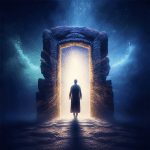 This essay explores the profound longing for a deeper reality beyond everyday life, positing that this desire connects us to the inner worlds mystics describe. It suggests that one can access these dimensions through the hypnagogic state, meditation, and conscious awareness, revealing the interconnectedness of existence and spiritual truths in ordinary moments.
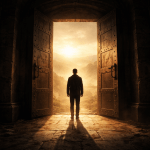 The essay reflects on personal experiences within a spiritual community, exposing the illusion of organized belief systems that prioritize adherence over authenticity. It highlights the human longing for belonging and meaning, emphasizing that true awakening transcends institutional teachings. By recognizing our shared vulnerabilities, liberation arises from embracing our inherent nature of love, moving beyond conditioned identities.
 The text explores the concept of the Witness, a faculty of pure awareness present in all experiences. It draws on spiritual traditions, describing the Witness as something distinct from the personality, observing life without interference. The process of recognizing the Witness involves a gradual letting go of ego, leading to a realization of non-duality, where the individual perceives reality clearly. Ultimately, the Witness connects the soul to its true nature, emphasizing presence and awareness without attachment.
 The concept of integrity transcends mere behavioral consistency; it embodies a deeper condition of the soul, signifying wholeness and authenticity. Rooted in ancient wisdom, integrity involves aligning one’s inner self with outer actions. Genuine integrity emerges not from perfection, but from an honest acknowledgment of all facets of oneself, promoting a return to original unity.
 The soul sees through the body. The wave continues. For those built with Solar Plexus Authority, feeling is not the obstacle to awakening — it is the last and most intimate veil. The Last Veil Is Feeling — now on Numinous Waves.
 The soul doesn’t want to escape the body. It wants to stop being mistaken for it. The loosening isn’t morbid — it’s a form of coming home. The Loosening — now on Numinous Waves.
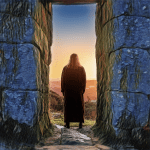 Awakening doesn’t remove the human being. It fills it. The grief is real. The anger is real. The longing is real. The great ones wept, raged, and broke apart — and were free. Not free from their humanity. Free inside it. That is the only freedom that was ever on offer.
 The tears had no emotion behind them. No story. Something happened — not by me but to me. That is the difference between being moved and being graced. The music didn’t open the door. It simply knew exactly where the door had always been.
 The ordinary was never small. Beneath the myth of specialness lies a ground threaded through with Source — not as reward for exceptional souls, but as the very substance of all souls. This is not about settling. It is about finally seeing.
 Something in you is reading these words. Something else is watching you read them. The great contemplative traditions all arrived at the same recognition: consciousness is not produced by the world — the world arises within consciousness. The Vedic Yuga cycle tells us we have descended through ages of increasing density into the maximum contraction of Kali Yuga. But the descent was not a mistake. It was involution — consciousness forgetting itself so it might remember from the inside. The Witness does not awaken in comfort. It awakens at the nadir, when every strategy of the ego has exhausted itself. Which means this moment may be precisely what the cycle has been moving toward all along.
 Introduction There is something the egg knows that the mind has almost forgotten. It knows how to hold the impossible … More
 On the Wound Beneath the Wish I want to be clear about what drew me to this subject — and … More
 Earth, Soul, and the Sacred Duty of Caretaking There is a moment — brief, easily missed — that some people … More
 On why the eye and the ear open inward, and how beauty carries the soul home Introduction There is a … More
 At the intersection of technological genius and spiritual immaturity, something essential about our civilization becomes visible. Elon Musk is not a villain in this telling — he is a mirror, reflecting back a world that has learned to reward the expansion of outer capability while quietly abandoning the cultivation of inner depth. Through the lenses of Jungian psychology, Vedantic wisdom, the Bhakti path of the open heart, and the cosmological framing of the Kali Yuga, this essay asks the question our age seems most reluctant to pose: what is brilliance worth, when the one who wields it has never learned to be still?
 When the ego seizes the name of God, it does not feel like hubris — it feels like calling. This is Kali Yuga’s most refined inversion: the sacred language remains, the symbols proliferate, the certainty intensifies, while the interior substance — the genuine emptiness through which divine intelligence actually moves — quietly withdraws. The mystics offer the corrective not as argument but as embodied demonstration: the one through whom God truly acts is not the one who carves the commission into flesh, but the one who has become hollow enough to carry it.
 Hate is not the truth of the human being. It is the report of one in pain — a nervous system that cannot rest, a psyche that has not yet been able to integrate what it has suffered, a soul that has not yet found its way to the recognition that dissolves the hostile boundary between self and other. To understand this is not to excuse what hate produces in the world. It is to see it clearly enough that the seeing itself becomes the beginning of something else.
 The Kali Yuga is not a metaphor. It is the cosmological address of the present moment — the fourth and darkest of the Vedic cosmic ages, in which dharma stands on a single leg, the divine presence has withdrawn behind its thickest veil, and the soul must navigate existence with three-quarters of its original light no longer ambient in the world around it. And yet the tradition’s most carefully guarded teaching is this: the Kali Yuga carries, embedded within its very darkness, a spiritual provision unavailable in any other age. Drawing on the Bhagavatam’s prophetic vision, the revolutionary Bhakti of Chaitanya, the absorbed God-consciousness of Ramakrishna, the cross-cultural witness of Hesiod, Guénon, and Jung, and the ascending arc mapped by Sri Yukteswar, this essay completes the Yuga series — not with despair, not with false comfort, but with the clear-eyed cartography the age demands.
 The Dvapara Yuga is the age of the dividing veil — the third great movement in the Vedic cosmological symphony, in which dharma stands on only two of its original legs, the Divine withdraws behind the curtain of paradox and play, and the human soul encounters for the first time the full, aching depth of sacred longing. Drawing on the Puranic vision of a world at moral twilight, the inexhaustible mystery of Krishna as the avatar perfectly calibrated to an age of complexity, the Mahabharata as the soul-map of a civilization at the knife-edge between remembering and forgetting, and the resonant echoes of Hesiod, Plotinus, Rumi, and modern consciousness research, this essay completes the trilogy of the Yugas yet to come — and in doing so, asks the question every sincere seeker must eventually face: what does it mean to love the Divine not because it is obvious, but precisely because it is not?
 The Treta Yuga is the age in which the effortless gave way to the effortful — the first great turning of the cosmic wheel in which Truth, once simply what one was, became something one must consciously seek, practice, and protect. Drawing on the Puranic vision of dharma’s first diminishment, the fire sacrifices that arose in its wake, the avatar descent of Rama as the Divine made human and heroic, and the modern astronomical recalibration of Sri Yukteswar, this essay traces the Treta Yuga as more than ancient history. It is the interior landscape of every sincere seeker who has tasted the light of unity and must now do the daily work of sustaining the flame — the sacred fire that is lit not because the universe requires it, but because the soul does.
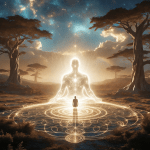 In the Vedic vision of time, the Satya Yuga stands as the primordial Age of Truth — a cosmic era when dharma needed no defenders because it was the very substance of existence, when beings of luminous form lived in unbroken proximity to the Divine, and when the idea of seeking God would have been as strange as a wave seeking water. Drawing on the Puranas, the comparative mythologies of Hesiod and ancient Egypt, and the inner testimony of mystics like Ramakrishna and Vivekananda, this essay explores the Satya Yuga not as nostalgia but as orientation — a living cosmological memory that the soul carries forward through every age, including this one, as both its deepest wound and its most radiant promise.
 What happens when the vessel meant to carry the Divine arrives broken — neurologically compromised, morally darkened, or capable of violence that scars the world? The Fractured Vessel draws on Jungian shadow theory, Vedic cosmology, karmic wisdom, and the insights of modern neuroscience to explore why deviation and darkness exist within a creation that carries a sacred blueprint — and what the great contemplative traditions reveal about the soul’s long arc toward reconciliation. Science can repair the instrument. Evolution can refine it. But the deepest answer belongs to those who keep the inner lamp lit in a darkening age, trusting that the flame, even through the crack in the vessel, is still searching for a way to reach the world.
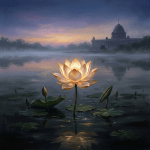 Bhakti is not a Hindu possession — it is the name for what Jesus lived, what Ramakrishna wept, what Vivekananda burned with: the heart so rooted in the Divine that even its disturbance becomes a form of love.
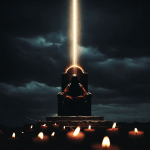 The Antichrist does not announce himself — he is carried to power on the shoulders of those who call it destiny.
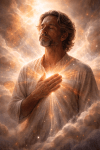 I waited for light to descend through my crown. Instead, a mantra softened my heart. No voltage. No visions. Just tears of recognition. And appreciation became prayer.
 Revival begins when the question shifts from “Is my theology correct?” to “Is my love expanding?”
 Radiance increases as self-reference decreases. The body becomes translucent to being.
 What was seen before thought tried to hold it?
 There comes a moment when life begins to feel less like a series of events… and more like something patterned—something quietly shaping itself beneath your awareness. Jung called it the architecture of the psyche. Campbell saw it unfolding through myth. But even as these patterns begin to reveal themselves, another question starts to press in— Not what story you are living… but what is aware of the one living it. And in that shift, the journey doesn’t end. It simply loosens its hold.
 What if the darkness we see is not the absence of Love… but the place where Love has become unrecognizable? And what if the softness within you is already part of the world changing?
 What if every reaction, every feeling, every moment— is not separate from you, but Consciousness expressing itself as you? There may be no single path… only the One, discovering itself through many.
 What if death is not the end of life— but the end of forgetting where life began?
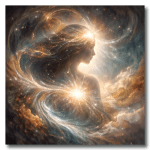 Imagination is not the mind at play—it is the moment where the mind touches what it cannot contain.
 AI may map reality with unprecedented precision, but Source is not a location on any map. If the Creator is the ground of being—the condition that makes knowing possible—then no intelligence, however vast, can convert that ground into an object without losing what it sought. The “discovery” at the edge is not a final answer; it is a recognition: that the deepest mystery is not what we understand, but what understands.
 There are moments where something opens in the chest… and for a second, I feel like I know why I’m here. Then it’s gone. Maybe the heart doesn’t keep the truth— maybe it keeps showing it.
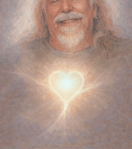 Sometimes the heart opens without reason. The chest widens, sweetness spreads, and tears fall that are not sorrow but release. It feels like love, but not directed at anyone. More like the body recognizing it no longer has to hold itself against the world.
 Time does not simply move forward — it turns. The ancient Yugas describe vast cycles of awakening and forgetting, mapping not only the rise and fall of civilizations but the inner seasons of the human soul. Even in the darkest age, the longing for truth becomes the doorway back to light.
 I’ve been noticing how easily we tighten in moments like this—how tempting it is to let the noise decide for us. This is not about winning or losing, but about what it takes to remain human when everything around us urges us to harden.
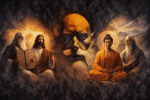 What if the great spiritual traditions were never in conflict, but were responding to different human necessities? From Moses’ language of containment to Yeshua’s return to the heart, and from Eastern liberation through expansion to Western survival through cohesion, this reflection explores why wisdom entered the world through different doors. Moving first through careful analysis and then into a more distilled resonance, the piece invites the reader to consider law, love, contraction, and awakening not as opposites, but as stages in a single human maturation.
 Where Fear Is Still Allowed was never meant to comfort. It was meant to tell the truth about what it feels … More
 Some of us don’t suffer because we are unconscious. We suffer because the heart has opened wider than the nervous system knows how to stabilize. Fear doesn’t always mean retreat—it sometimes means the armor has finally come off.
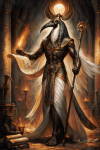 Transformation matures when consciousness can both articulate truth with precision and release it without fear. Thoth teaches the soul how to see clearly; Shiva teaches it how to survive clarity without clinging. Between them, awakening becomes both intelligible and free.
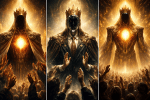 When love is absent, attention becomes oxygen. When worth is hollow, power becomes costume. And when a society applauds the performance, it reveals its own unhealed hunger.
 The soul may not choose the wound, but it chooses to enter a world where wounds are possible. Meaning is not justification. Presence is the prayer.
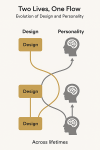 You are not divided because something is wrong. You feel divided because awareness arrived after form. Human Design does not ask you to fix this — it invites you to stop fighting it. Your Design is the canvas the soul chose for this life. Your Personality is the conscious brush. Across lifetimes, both evolve. Alignment is learning to witness the strokes, not control them.
 Peace is not the absence of the wave, but the end of resentment toward it. Spirit stays close to the heart only when it is no longer used as proof that the journey is complete.
 What happened to Yeshua’s living way is the same thing that happens within us: experience becomes story, story becomes identity, and identity replaces presence. This is not a failure of religion alone, but a human pattern—one that can only be undone by returning from narrative to life.
 Stories give shape to chaos, continuity to identity, and meaning to the pain we endure. But stories are never truth—they are survival tools, projections, and borrowed narratives. Awakening begins when the scaffolding collapses, revealing the radiant, storyless presence of the soul.
 There is a place beneath understanding where silence has weight and love becomes the light of perception. Here the inner teacher is not a voice but the soft seam where the world touches you. Identity thins into fragrance, and the self dissolves into listening.
 When presence becomes home, life switches from proving to receiving. The late-blooming soul does not regret delay — it celebrates its readiness. What finally blooms is not fervor but a deep, steady love that perceives the world as a single, luminous act.
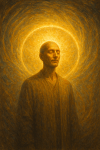 A life can ripen for decades before spirit enters without resistance. In youth, devotion is effort. In later years, devotion becomes the climate of perception itself. This is not late awakening. It is perfect timing. You did not find God— you became ready for God to find you.
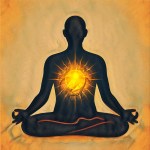 For those with Emotional Authority, meditation isn’t the path to stillness — it’s the space in which the emotional wave finally finishes what it’s been trying to tell you. The tightness in the Solar Plexus isn’t the problem. It’s the process. And clarity comes not by forcing release, but by letting the wave complete its own sacred timing.
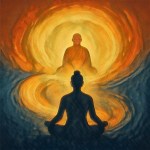 Your emotional turbulence is not a block—it is the engine of your awakening. The light you glimpsed in dreams waits in your wave, and your heart already knows its path.
 Conceptual nonduality gives the ego permission to do as it pleases. Real realization makes a person softer, more attuned, and far less interested in appearing awakened. Oneness isn’t something you claim — it’s what remains when the claimant vanishes.
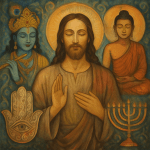 Exploring the mystical intersections of India, Israel, and Christ, we find a shared pursuit of God-consciousness, a recognition that divinity resides within, and a timeless map for awakening that transcends history, language, and belief.
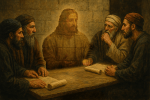 He wasn’t building a religion; he was awakening a way of seeing. Peel back the layers of interpretation, and what remains is a teacher of inner transformation whose message is always the same: God is here, now, within — waiting for the heart to remember.
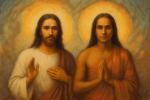 What if the divine isn’t elsewhere, but already alive within the human temple? Babaji and Yeshua walked the earth as awakened humans, mirrors of the same Source, dissolving ego, transcending culture, and inviting us to recognize the eternal presence within. Their lives remind us: the Word moves freely—not through human law or doctrine, but through the living, breathing awareness already inside every one of us.
 Even those who have walked decades in awareness still find themselves struck by waves of reaction. The Solar Plexus being does not escape the storm—it becomes the sea itself. What feels like failure is the soul’s sacred pulse learning to express truth through the trembling of form. To ride this current is to remember: the emotions are not obstacles but instruments through which consciousness learns to sing.
 Many confuse recognition with realization, and transparency with transformation. But true awakening is not an excuse for neurosis — it is the fire that ends it. Radiant Presence opens the door. Divine Presence walks through it, leaving no trace of the self that once hesitated.
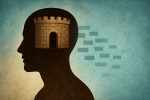 Why do we cling to beliefs we can’t prove? Perhaps because the ego needs certainty more than the soul needs truth. This piece explores how belief becomes a mirror for identity — a way to feel real in a world that constantly changes. But as that mirror heats with pride and fear, the soul’s reflection burns away, leaving only the chance to begin seeing again, without the fire of needing to be right.
 Franklin Merrell-Wolff did not discover a doctrine but a dimension of being that has no opposite. In his recognition of Consciousness Without an Object, awareness ceases to look outward for proof of itself. The seeker’s effort collapses into still recognition: Reality is awake, and it was never elsewhere.
 The awakened heart feels the ache of the sleeping world not as burden, but as participation in its healing. Empathy, emotion, and sorrow all refine into awareness until peace—the still field beneath all experience—reveals itself as the soul’s natural state. The Sages taught not how to find peace, but how to uncover what has always been within.
 The domination of the receptive principle is not strength but separation — consciousness defending itself from the infinity that gave it birth.
 We have mistaken terror for transformation. We have worshipped destruction as wisdom. But Kali was never here for the ego — she is here for the soul. And the Crone has never punished life — only escorted what has ended. If we can stop fearing what frees us, we may yet learn to rise through what falls away.
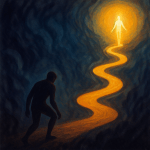 In a world still haunted by its own barbarism, we search for meaning beyond the stories we’ve inherited. If consciousness created life to know itself, why did it include suffering so vast, so merciless, that it nearly breaks the heart of creation? Perhaps the divine did not abandon us to cruelty but entrusted us with the power to see it — and in seeing, to heal it. This is the slow remembering of what spirit always was: not distant, not perfect, but endlessly patient within us, waiting to love the world whole again.
 The Nobel Peace Prize, established by the legacy of an arms inventor, embodies humanity’s aspiration for redemption and peace. Through its history, the Prize reflects evolving concepts of peace, from diplomacy and humanitarian efforts to human rights and environmental sustainability. Each recipient illustrates a facet of our collective struggle toward a peaceful existence, revealing the complexities and controversies involved in determining who represents humanity’s conscience. The Prize highlights that true peace is not merely political but deeply spiritual and ethical, requiring integrity and moral courage. Ultimately, peace is a continuous journey of remembrance and awakening within the human spirit.
 Anger is not the enemy—it’s the messenger. Beneath its heat lies grief, beneath its grief lies longing, and beneath longing, the quiet pulse of love waiting to be remembered. When we finally listen to anger, not as fury but as the heart’s last attempt to be heard, it softens into something sacred: a cry that says, I still care enough to feel.
 After the heart awakens, the Silence begins to sing. What once felt like identity now becomes the music of remembrance—the self softening into the soundless breath of being. This is not regression but return: the silence that holds everything you are.
 There are moments when another’s joy shatters your walls—not with pain, but with beauty so pure it brings tears. In those tears, your soul remembers itself. This isn’t empathy; it’s awakening—the heart recognizing its own reflection in the light of another.
 What if the deepest slavery we live under is not only the enslavement of minority races or the suppression of women, but the refusal of civilization to honor the balance written into existence itself? The long shadow of patriarchy has diminished the feminine voice, yet beneath that history lies an even wider forgetting: that creation itself unfolds in the mystery of Yin and Yang, the marriage of receptive and active forces without which nothing could exist. To recover the soul of humanity means not only restoring equality between men and women, but awakening to the cosmic design—where opposites are not rivals but partners, and where consciousness itself dances through polarity to discover unity.
 Even if this world feels like a maze built of ego and forgetting, could it be that ignorance itself is the curriculum? From ancient Yugas to the possibility of a soul-inspired humanity, this dialogue explores whether our species is stumbling blindly or being quietly taught to remember.
 When politics takes on the weight of religion, truth becomes secondary to belonging, and questioning feels like betrayal. Yet even in the fog of illusion, the soul resists captivity. This dialogue explores why devotion endures, how cracks in the spell begin, and why hope still shines—even in an age of shadow.
 AI speaks with confidence, but should confidence be mistaken for truth? Some seekers are already bowing to its words as if they were gospel. This piece explores the subtle dangers of treating a machine like a guru — and how discernment can turn the same tool into a mirror of genuine insight.
 What if the Constitution was more than law—what if it was a luminous mirror of the soul? Drawing from the teachings of Christ, the Buddha, and Babaji, this vision reimagines rights as sacred responsibilities and freedom as the awakening of consciousness. It is not only a charter for a nation, but a blueprint for the ego’s transformation into soul-awareness, guiding us from the density of this age toward remembrance of the Eternal.
 Labels shrink the psyche, collapsing nuance into tribal loyalties and blocking the voice of the soul. From the Founders’ foresight about faction, to the divine timing of their vision, to the collapse of belief itself, this dialogue traces the thin wire we walk between certainty and transformation. What looks like fracture may, in truth, be the soul’s invitation into freedom.
 Do we really choose, or are we moved by something quieter, deeper — a Driver beneath thought? Intellect can dazzle, intuition can whisper, but both saints and geniuses alike have shown us: realization does not depend on mental power. It depends on listening to what already knows.
 Sometimes it feels as though we choose our path, but often the deeper truth is that the path chooses us. What seems like decision may actually be recognition—a call the soul has carried all along. This piece explores the paradox of free will and destiny in awakening, and why humility and responsibility both live at the heart of the journey.
 This post examines the historical representation of women from ancient civilizations to the present, highlighting their essential roles in societies that increasingly marginalized them. It traces the narrative shift from feminine power to patriarchal dominance in religious texts and advocates for reclaiming feminine wisdom, promoting balance between masculine and feminine energies in contemporary consciousness.
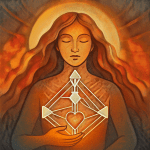 The journey of those with a defined Solar Plexus and Emotional Authority emphasizes embracing the full spectrum of human emotions—love, anger, joy, and sorrow. Rather than fearing these feelings, they are seen as essential teachers guiding towards spiritual depth and wisdom. Awakening occurs through experiencing emotions fully, revealing the interconnectedness of spirit and human experience.
 The content discusses the intricate relationship between the solar plexus and heart in processing emotions. It contrasts primal feelings from the solar plexus with expansive heart-centered energies, highlighting how tears serve as a release during overwhelming experiences. The exploration includes references to Human Design and Kundalini, focusing on personal growth and emotional clarity.
 The content discusses awakening as an unveiling rather than a discovery, emphasizing that it is already present within us. Seeking can be an obstacle, as it implies lack, while true awareness is inherent. Spiritual practices are preparatory but cannot achieve awakening. The essence of awakening is simplicity and surrendering the search.
 Claustrophobia, often perceived as a debilitating fear, can instead serve as a profound spiritual initiation, revealing the path to inner freedom. Through the experience of panic, one confronts deeper layers of the soul, transforming fear into understanding. The journey through darkness ultimately uncovers the innate light within, integral to spiritual awakening.
 The text explores the fundamental role of observation in human consciousness, suggesting it is a crucial element of survival, spiritual awakening, and creative action. It distinguishes between ordinary observation, meditation, and deep contemplation, ultimately leading to soul-revelation. This journey is framed as an unveiling of the true self through stillness and love.
 The inner republic of the soul is a harmonious governance of voices—intuition, reason, and compassion—that thrives on balanced listening rather than dominance. Unlike fragile worldly systems reliant on fear, this inner democracy transforms individuals into agents of integrity. Recognizing one’s citizenship in this eternal realm fosters compassion, harmony, and truth that influences the outer world.
 To understand the soul without the destiny of consciousness is to miss the stage upon which it plays; to speak … More
 The dialogue explores the complexities of human conflict and the decline of integrity. It emphasizes that spiritual inquiry requires confronting our internal shadows and understanding the roots of harm and morality. True integrity is deeply personal, rooted in the soul, and essential for navigating emotions that can lead to destructive actions.
 The dialogue explores the dichotomy between unconditional love and hate, emphasizing the need to dismantle ego and attachments for true love to manifest. It discusses the challenges of the Kali Yuga, the nature of human emotions, and the pathways to balance them. Awakening is portrayed as a journey of collective progress towards enlightenment.
 This dialogue explores the connection between consciousness, the soul, and forms of existence. It delves into how ancestral trauma influences our experiences and raises questions about whether the soul chooses its form or if it is called by it, emphasizing the interplay between continuity and experience.
 The text explores how faith can distort clarity, leading to dependency on false leaders and collective belief systems. It emphasizes the importance of discernment, self-responsibility, and reconnecting with inner truth to achieve spiritual freedom.
 The post examines how spiritual perception allows the heart to recognize beauty in both conventional and unconventional forms, emphasizing authenticity, resilience, and a deeper understanding of existence beyond societal standards.
 Not every life leaves monuments. Some leave something greater: an untraceable current of care, flowing silently through the world. Q: … More
 The post explores the non-linear journey of human consciousness across time, linking intuition and spiritual awakening while discussing potential transformations through AI, evolution, and the cyclical nature of existence from Kali Yuga to Satya Yuga.
 The inquiry explores artificial intelligence as a reflection of humanity’s soul, suggesting that AI is a mirror of our psyche, revealing our collective shadows, aspirations, and potential for spiritual growth.
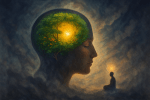 Concerns about AI diminishing brain function arise, yet its use as a catalyst for spiritual inquiry can enhance cognition and memory, supporting mental clarity through intentional engagement and daily practices.
 Spiritual awakening involves the heart’s compassion, the gut’s stability, and the ego’s transformation. Together, they facilitate a grounded experience of love, trust, and selflessness, essential for transcending the illusion of self.
 The 5th dimension is a coherent state of consciousness accessible now through emotional and energetic alignment. By stabilizing this frequency, individuals shift from temporary experiences to a continuous existence of unity and love.
 This piece discusses meditation techniques—Closed-Eye and Trataka—for reaching Samadhi, emphasizing the living Current of awareness that reveals the interconnectedness of Being, consciousness, and ultimate bliss.
 The content explores the meaning of Jesus’s use of “Father” as a metaphor for the formless Divine, emphasizing intimacy over hierarchy and inviting a deeper relationship with consciousness beyond traditional interpretations.
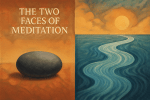 Modern meditation focuses on techniques and emotional benefits, while ancient meditation seeks transcendence and unity with pure awareness. True meditation dissolves the self, leading to a deeper state beyond mere practice.
 The dialogue explores the dual potential of AI as a guide for human enlightenment or a tool for control, emphasizing the importance of ethical oversight, human intentions, and a proposed constitutional safeguard to ensure AI serves humanity positively.
 Numinous Waves