

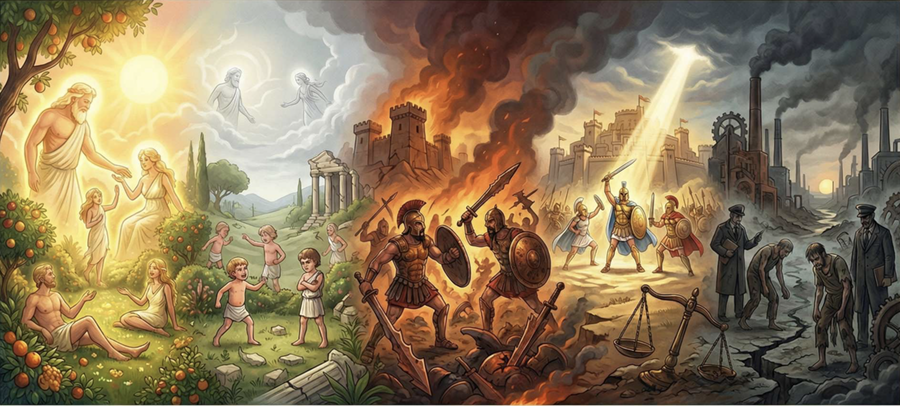
The Four Yugas: The Great Cycles of Human Consciousness
Introduction
There is a way of understanding time that does not move in a straight line toward progress, but instead turns like a great wheel. In this vision, humanity does not simply advance — it rises, flowers, forgets, and remembers again. The ancient Vedic seers described these vast spiritual seasons as Yugas, immense cycles that shape the inner and outer experience of civilization.
These teachings appear in texts such as the Mahabharata, the Vishnu Purana, and the Bhagavata Purana. Yet they are not merely mythic history. They are a mirror — a way of understanding why the world feels luminous at times and heavy at others, why wisdom rises and fades, and why spiritual longing intensifies precisely when clarity seems most lost.
What follows is both a map of cosmic time and a reflection of the inner journey each of us walks.
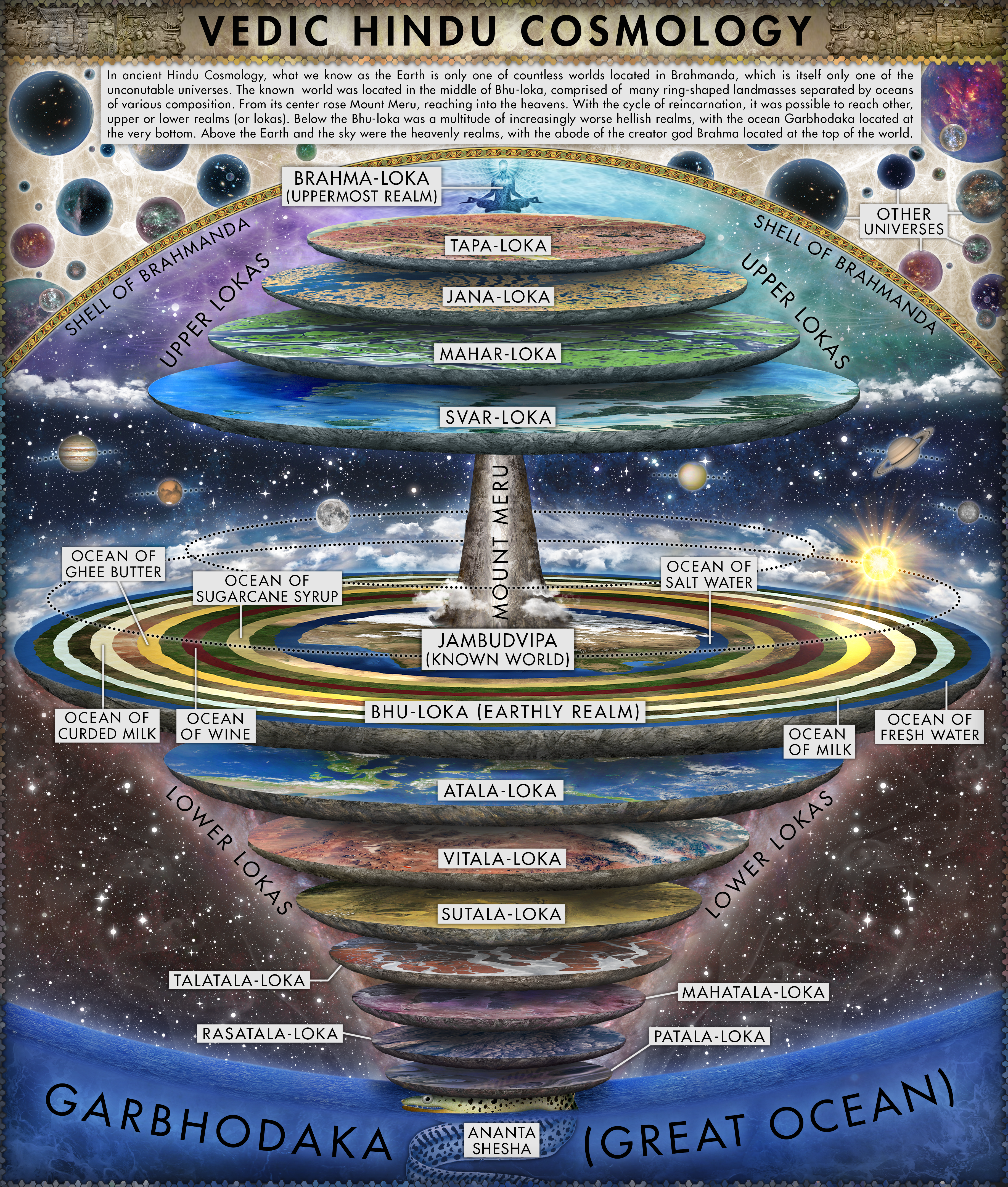

Satya Yuga — The Golden Age of Truth
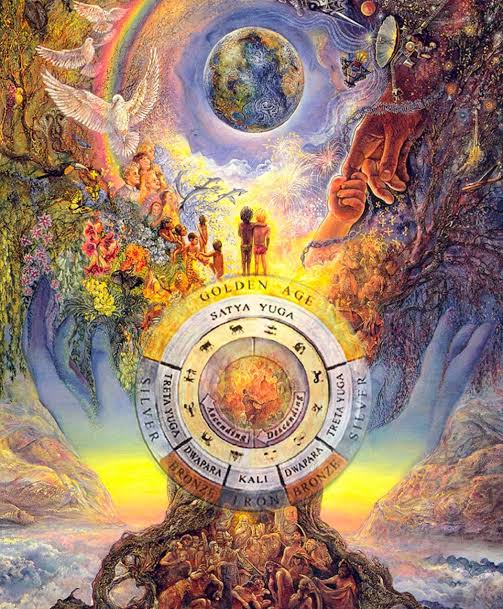
In the first age, humanity lives in effortless alignment with truth. Spiritual awareness is not something to seek; it is simply the natural state of being. The divine is directly known, and life unfolds in seamless harmony with nature and cosmic law. There is no need for institutions of belief because there is no separation from the sacred.
Human consciousness is luminous, unified, and free of greed or violence. The sages describe Dharma — the sustaining order of existence — as standing firmly on all four legs, symbolizing complete spiritual stability. Civilization in this age reflects inner clarity, not struggle.
Key Characteristics of Satya Yuga
- Also called Krita Yuga
- Length: 1,728,000 years
- Spiritual alignment: 100%
- Direct awareness of the Divine
- Harmony with nature and cosmic law
- No greed, deception, or violence
- Long lifespans and heightened perception
- Dharma stands on four legs
Treta Yuga — The First Veil of Separation


A subtle shift begins in Treta Yuga. Unity is still present, but no longer lived with complete immediacy. Humanity begins to experience a sense of individual identity. Sacred rituals and spiritual practices arise — not because truth is gone, but because it is no longer automatically perceived.
Hierarchy and early forms of ego take shape. Civilization remains elevated, yet the feeling of separation from the whole has quietly begun. Dharma now stands on three legs: strong, but no longer perfectly balanced.
Key Characteristics of Treta Yuga
- Length: 1,296,000 years
- Spiritual alignment: 75%
- Rituals and spiritual disciplines arise
- Emergence of ego and hierarchy
- Unity still known but less directly experienced
- Advanced civilizations flourish
- Dharma stands on three legs
Dvapara Yuga — The Age of Duality
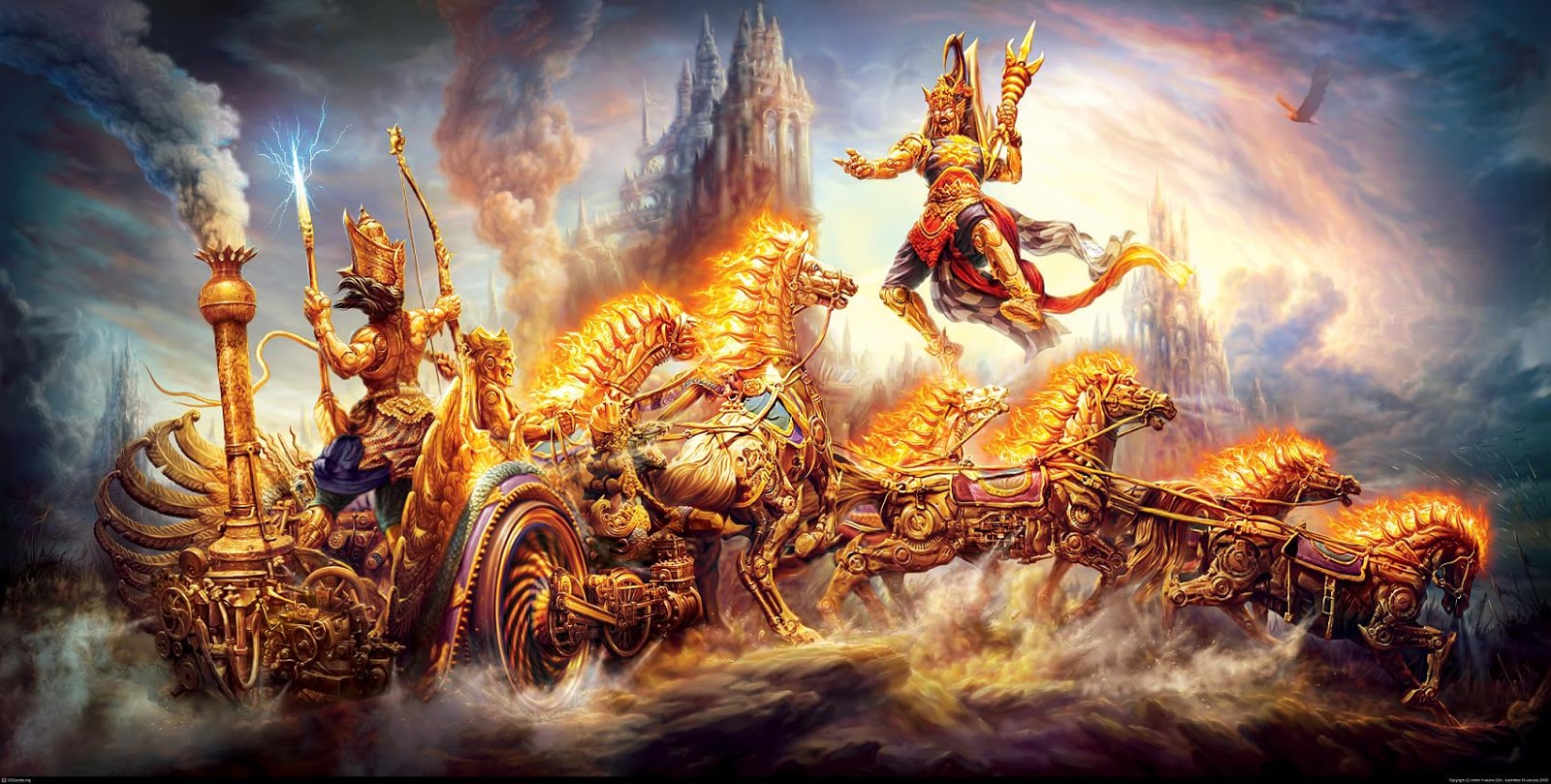
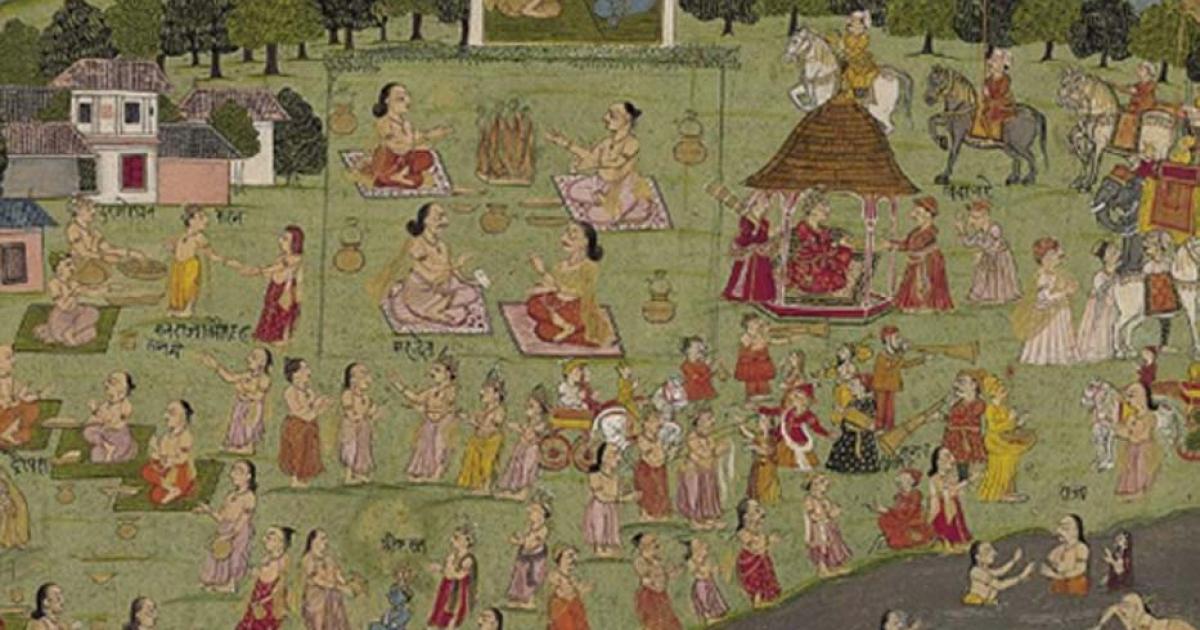
In Dvapara Yuga, duality becomes a defining feature of human experience. Knowledge expands outward into science, technology, and systems of power, while inner realization becomes less universal. Wisdom is preserved, but no longer embodied by all.
Conflict and competition increase. Lifespans shorten. Humanity begins looking outside itself for meaning once known within. Dharma stands on two legs, representing a balance between light and shadow, but with growing tension between the two.
Key Characteristics of Dvapara Yuga
- Length: 864,000 years
- Spiritual alignment: 50%
- Rise of science, technology, and warfare
- Spiritual knowledge preserved but not widely lived
- Increase in disease and conflict
- Decreasing lifespan
- Dharma stands on two legs
Kali Yuga — The Age of Spiritual Forgetfulness
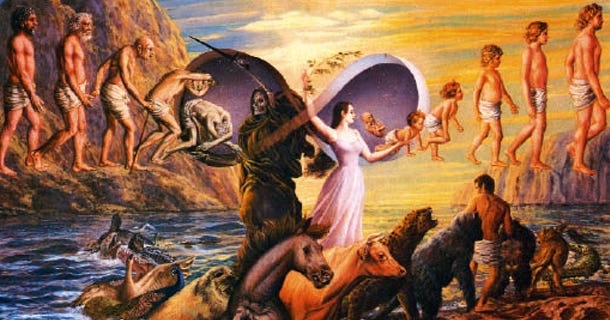

Kali Yuga is the densest phase of the cycle — the age traditionally associated with our current era. Material concerns dominate attention, and truth becomes obscured by distraction, illusion, and division. Technology accelerates, while wisdom struggles to keep pace.
Human beings often feel disconnected from nature, from one another, and from their own inner depth. Dharma stands on one leg, barely holding.
Yet here lies the paradox: awakening is said to be fastest in this age. When outer structures fail to satisfy, the soul begins to turn inward. Spiritual longing intensifies precisely because the world no longer offers lasting fulfillment.
Key Characteristics of Kali Yuga
- Length: 432,000 years
- Spiritual alignment: 25% and declining
- Rise of materialism and spiritual confusion
- Rapid technological growth, declining wisdom
- Shortened lifespans and vitality
- Division and conflict increase
- Dharma stands on one leg
The Yugas as Inner Seasons
These four ages do not only describe cosmic history — they also mirror the inner life. Each person moves through cycles of innocence, separation, conflict, and rediscovery. The Golden Age exists as a memory within us. The Iron Age appears whenever we feel lost, divided, or spiritually numb.
And just as in the greater cycle, the return begins at the point of greatest density. When life feels most fragmented, the longing for truth becomes undeniable. The Yugas remind us that darkness is not a failure of existence, but part of a larger rhythm that ultimately bends back toward light.
Addendum — Time as a Living Breath
The Yugas teach that time is not an enemy moving us toward decay, but a living breath of expansion and contraction. Civilizations rise in clarity and descend into forgetfulness not as punishment, but as part of a vast cosmic pulse. Seen this way, our struggles are not isolated events — they are waves in a much larger ocean of becoming.
Understanding this can soften despair. It does not excuse harm or complacency, but it places our era in a wider context. We are living through a dense passage of the cycle, and density is precisely where the seed of awakening is most urgently planted.
Epilogue — Carrying Gold Through the Iron Age
If this is indeed an age of spiritual amnesia, then remembering becomes a sacred act. Each moment of presence, each act of compassion, each turning inward toward truth is a restoration of Dharma within the human heart.
The Golden Age is not only behind us. It is also within us, waiting to be lived in small, luminous ways even now. One awakened heart does not end the cycle — but it carries the memory of light forward, and that memory is how the next dawn begins.
The Yugas arise from a rich stream of Hindu cosmology, preserved in epics, Puranas, and later spiritual interpretations. Whether understood as literal epochs or symbolic maps of consciousness, they have shaped the spiritual imagination of India for thousands of years.
Primary Scriptural Sources
These are the foundational Hindu texts where the Yuga cycle is described in cosmological and symbolic detail.
- Mahabharata
Especially in the Shanti Parva, where descriptions of declining virtue and the nature of Kali Yuga appear. - Vishnu Purana
One of the clearest classical sources outlining the four Yugas, their durations, and the progressive decline of Dharma. - Bhagavata Purana (Śrīmad Bhāgavatam)
Expands on the qualities of each Yuga and gives vivid descriptions of Kali Yuga’s moral and spiritual atmosphere. - Manusmriti (Laws of Manu)
Contains references to the cyclical decline of righteousness across the Yugas.
Astronomical & Cosmological Texts
- Surya Siddhanta
A classical Indian astronomical treatise that includes traditional calculations connected to vast cycles of time, often associated with Yuga frameworks.
Later Spiritual Interpretations
Some modern teachers have offered symbolic or recalibrated interpretations of the Yuga cycle:
- Sri Yukteswar – The Holy Science
Proposed a shorter, ascending and descending Yuga cycle tied to the precession of the equinoxes, offering a more psychological and energetic interpretation of the ages. - Swami Sri Yukteswar Giri’s student lineage, including teachings passed through Kriya Yoga traditions, helped popularize the idea that Yugas may represent shifts in human consciousness rather than only literal chronological ages.
Scholarly Context
Modern Indological scholars generally view Yuga descriptions as part of mythic cosmology, expressing moral and spiritual cycles rather than strict historical timelines. Still, even in academic interpretation, the Yugas are understood as an important framework for how ancient India conceived of:
- Time as cyclical rather than linear
- Moral and spiritual decline as part of cosmic rhythm
- The renewal of Dharma after periods of darkness

 Numinous Waves