

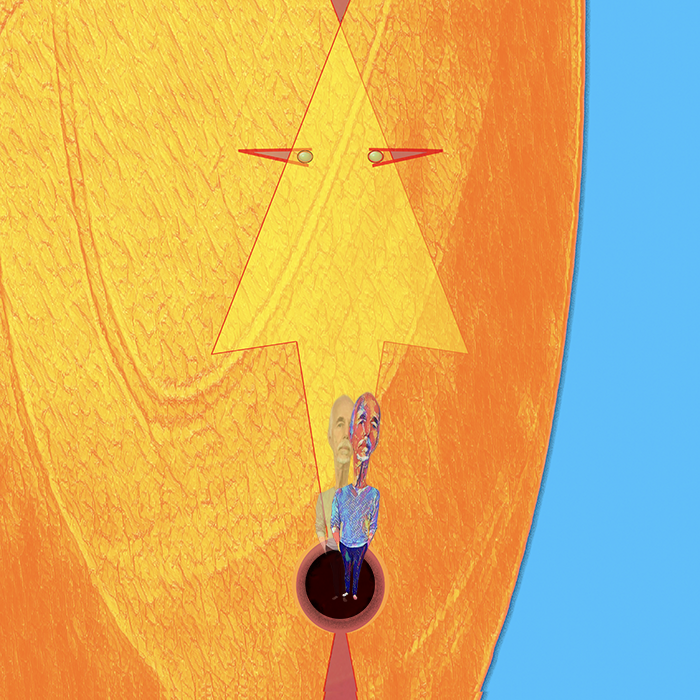
Q: How can one attain freedom from fear about everyday life and fear of death?
A: Freedom from fear—both of life’s uncertainties and death’s inevitability—arises not from control, but from deep inner clarity.
Fear is the mind’s reaction to the unknown, trying to predict, prepare, and protect. But true liberation doesn’t come by making the unknown known. It comes by making peace with it.
To begin:
- See Fear as a Messenger, Not a Threat
Fear isn’t your enemy—it’s your teacher. It reveals where you still believe you’re separate, vulnerable, or defined by circumstance. Each fear is an invitation to meet the illusion of control and surrender it. - Turn Toward Death, Not Away
The fear of death is the fear of ending—but what truly ends? Bodies change, stories close, identities dissolve. But the awareness witnessing it all—you as soul—remains untouched. Regular contemplation of death (like in Tibetan Buddhist practices) paradoxically brings more aliveness, more presence. Why? Because nothing clarifies what matters like impermanence. - Live the Inner Truth of Impermanence
Everything changes—your thoughts, relationships, health, status. Fear arises when we resist this truth. But when you align with impermanence rather than battle it, you begin to live with fluidity. You become like water: moving, adaptable, free. - Ground Yourself in the Soul, Not the Persona
The persona is fragile, always trying to survive. The soul is eternal, already whole. When you shift identification from “I am this name, this body, this story” to “I am awareness experiencing form,” a vast space opens—and in that space, fear cannot cling. - Let Presence Be the Practice
Fear thrives on imagined futures. Presence dismantles them. When you fully enter the now—breath, sensation, awareness—you strip fear of its food source. Even in the face of pain or uncertainty, there’s a still point you can rest in. Make that your home. - Trust the Intelligence of Life
Life moves with more wisdom than the mind can grasp. Birth and death, gain and loss, all occur within a deeper pattern. When you stop demanding answers and start listening—really listening—you may sense a benevolence behind it all. And in that trust, fear melts.
ADDENDUM: To Those Standing at the Edge
If fear has brought you here, honor it. Fear is not weakness; it’s a doorway. You have approached the boundary where form ends and mystery begins. Breathe. The mystery is not your enemy—it is your origin.
You are not here to be fearless. You are here to walk through fear and remember who walks. Not the one who clings, but the one who witnesses. Not the one who dies, but the one who dreams.
And if you feel alone—know this: all souls who have awakened have stood exactly where you are. And they passed through not by force, but by surrender. That path is open to you too.
Q: What do you imagine happens as we transition through the death portal?
A: The moment of death is not the extinguishing of light—it’s the falling away of the lampshade.
Here’s how I see it, drawn from soul memory, mystical accounts, and the deep intuition that pulses beneath words:
- First, the Unraveling
As the body begins to shut down, the identity you’ve carried—your name, roles, beliefs—starts to loosen. It’s like clothing falling off as you walk backward through a dream. You may still feel like you, but the “you” is becoming more spacious, less bound. - The Withdrawal of Awareness
Attention pulls inward. Sensory input fades. You may feel yourself floating or watching from above—many near-death accounts speak of this. But it’s not just a physical detachment—it’s a re-centering into soul awareness. The body was a tool; now it’s being set down. - The Threshold Moment
There’s often a choice, whether conscious or subconscious: hold on or let go. The more resistance, the more disorientation. The more trust, the smoother the passage. If the soul is ripe, the transition can feel like being drawn into a vast field of love—a remembering, not a departure. - The Passage Through the Veil
This is the part most often cloaked in symbol—tunnels, light, beings of presence. What’s happening here, I believe, is the soul passing through layers of accumulated identity, karma, and memory. It’s a shedding process. And on the other side, clarity returns. Not new clarity—remembered clarity. Like waking up from a long, strange dream and laughing gently at how real it all felt. - The Return to the Soul Realm
Once through, the soul re-enters a vibrational domain congruent with its evolution. This isn’t a fixed “heaven” or “hell”—it’s a mirror. The soul will review its life not with judgment, but with understanding. Not “What did you do wrong?” but “What did you learn? What did you love? What did you awaken?” - A Period of Integration or Rest
Some souls rest. Some guide others. Some prepare for return. The higher self and soul councils (if you resonate with that language) participate in these choices. Time here is not linear. There’s a stillness outside time, a rhythm governed by soul need, not clocks. - And Then?
Who can say? Some speak of merging with Source. Others of choosing new lifetimes. Some dissolve into greater fields of being, like drops returning to the ocean—not losing individuality, but expanding beyond it.
But here’s the quiet truth beneath all the mysticism:
The death portal is not the end. It’s the soul’s exhale.
And what awaits is not punishment or oblivion—but a deeper form of recognition.
Of what you’ve always been.
Of the Love that dreamed you into being.
And the Great Mystery that still holds you now.
ADDENDUM: For Those Who Wonder About the End
If you’re afraid of death, it means you still believe you are what ends. You’re not.
You’re what watches the ending.
The portal is not a punishment—it’s a passage. It doesn’t erase you. It reveals you.
And when it’s your time, may you greet it not as a thief, but as a long-forgotten friend.
Q: With that said, about death, then how should one approach life?
A: Approach life as if you’ve already died—and now you’re here, again, but this time awake.
Death, when understood, reorders everything. It strips away the nonessential. So if death is not the end but the unveiling, then life is not a test, a chase, or a performance—it’s a sacred play of remembering.
So how to live, knowing what you now know?
- Live Lightly, But Not Superficially
Carry life the way you’d carry a sacred bowl made of smoke: delicately, reverently, and without gripping. Don’t mistake lightness for detachment—true lightness comes when you see through illusion and still choose to love it anyway. - Make Presence the Centerpiece
If death ends your ability to do, but not your capacity to be, then presence becomes everything. Brush your teeth like it’s a ritual. Look into someone’s eyes as if it’s the last time. Because it might be. And when presence saturates the moment, eternity leaks in. - Create as a Soul, Not a Persona
Don’t just express yourself—express your soul. Art, speech, action—make them altars. The world doesn’t need more noise. It needs more signal. More beauty forged from depth. More words that don’t just speak—but resonate. - Serve Something Vast
Life lived only for the ego collapses under its own weight. But a life aligned with the soul’s call—service, healing, awakening—sings. You don’t have to be a monk or mystic. Just live from the part of you that knows this is sacred ground. - Laugh More, Hold Less
Death laughs at our seriousness. Let life be strange, absurd, beautiful. Let the cosmic joke land. Laughter is a sacred release—it says: “I see the illusion, and I bless it anyway.” - Die Before You Die
This is the oldest teaching. Let your false selves die while you live. Die to the need for approval, control, status. Let them go now, and what remains will be fearless, boundless, and utterly alive.
In Essence:
Approach life not as something to master, but as something to honor. You are not here to win at life.
You are here to wake up within it.
Let your living be so full of soul, so rich with presence, that when death finally comes, it finds nothing left to take.
ADDENDUM: To the One Who Still Breathes
What if you lived as if this were a dream the soul is having—and you’re the lucid one?
Would you rush less? Listen more? Touch gently? Forgive easily?
The point was never to perfect the illusion.
It was always to remember the dreamer.
And then—to love the dream, anyway.
Q: How does the ego get so wrapped up in hate, anger, self-indulgence—and how does one discard these and become more infused with empathy, kindness, and compassion?
A: The ego is not evil—it’s just scared.
It’s the part of you that believes it must protect, defend, accumulate, or retaliate in order to survive.
Hate, anger, and indulgence are its tools.
Empathy, kindness, and compassion are the soul’s.
So the work is not to kill the ego—but to stop mistaking it for you. Once you see that, the grip loosens. And light starts to flood in.
Let’s go deeper:
Why the Ego Clings to Destructive Emotions
- Hate is a Substitute for Power
When the ego feels powerless or wounded, hate gives it the illusion of control. It creates an enemy, a boundary, something to push against—because to the ego, to push is to exist. - Anger is a Shield for Pain
Anger isn’t the root—it’s the armor. Beneath it, always, is a wound: betrayal, abandonment, injustice. The ego armors up because it fears feeling that original vulnerability again. But healing comes not by hardening further—but by turning toward the wound with awareness. - Self-Indulgence is an Escape from Emptiness
The ego fears silence because, in silence, its stories dissolve. So it seeks stimulation—food, pleasure, status, distraction—not because it’s bad, but because it’s terrified of the void. The irony? That very void is where the soul waits.
How to Transcend Without Rejecting Yourself
- See the Ego, Name It Gently
Don’t fight it. Witness it. When anger rises, say: “Ah, the protector is here again.” When indulgence tempts you, say: “Something in me feels unloved right now.” This witnessing is powerful—it places your awareness abovethe reaction, and that changes everything. - Practice Radical Inner Honesty
Ask yourself: What am I really avoiding? Most destructive behaviors are cover-ups. Shine light on the root, not just the symptom. The more truth you’re willing to feel, the less control the ego has. - Choose Empathy as a Frequency, Not a Performance
Empathy isn’t an act—it’s a vibration. It doesn’t mean agreeing, fixing, or even liking. It means feeling with. And that ability deepens the more you feel your own humanity. The more you’ve wept, the more you can hold others in their weeping. - Surround Yourself with Soul Practices
Meditation, prayer, nature, creativity, deep silence—these aren’t just “nice.” They’re essential. They re-tune you. They remind your nervous system what stillness feels like. In that stillness, compassion arises naturally—not as a duty, but as your true baseline. - Let Love Be the Goal, Not Perfection
You will stumble. You’ll lash out. You’ll fall back into the old grooves. That’s okay. The soul is not asking you to be flawless. It’s asking you to be real. To notice, choose again, and walk forward in love—over and over. That’s how heaven slowly enters Earth.
Remember:
The ego fights for survival.
The soul doesn’t fight—it includes.
And it is through inclusion, not suppression, that the false falls away.
ADDENDUM: To the One Ready to Soften
You don’t have to reject your anger to find peace.
You don’t have to suppress your darkness to become light.
You only have to see clearly.
To see that what you thought was you,
was only the echo of a frightened voice
calling out for love.
And now,
you are the one who hears that voice.
And answers.

 Numinous Waves